
In short: a writ petition under Article 226 of the Constitution asks the Calcutta High Court to correct an illegal or arbitrary act of the government, a public authority or a body doing public duties. It is used where a fundamental or legal right is violated and no equally effective remedy exists. Most writs are numbered WPA.
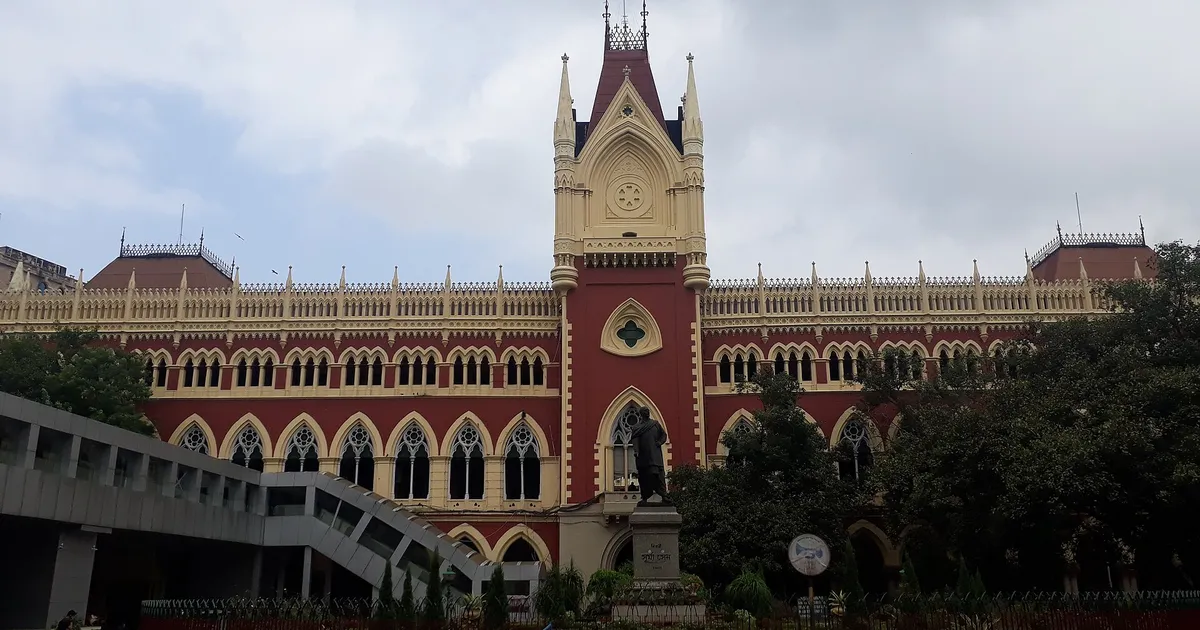
Writ petition under Article 226: when it lies
Article 226 lets every High Court issue directions, orders and writs to any person or authority within its territory. It can do so to enforce fundamental rights "and for any other purpose", which means other legal rights too. Article 32 gives a similar right to go straight to the Supreme Court, but only for fundamental rights. Article 227 gives the High Court supervisory power over the courts and tribunals below it.
A writ usually lies against "the State" as defined in Article 12. This covers:
- the central and state governments;
- municipal bodies and police;
- universities and boards;
- public sector banks and companies;
- other bodies under government control.
Common examples:
- police not registering or investigating a complaint;
- a government job or promotion wrongly denied;
- pension or dues withheld;
- a licence cancelled without a hearing;
- a university withholding results;
- an arbitrary demolition or seizure;
- a Look Out Circular issued without basis.
Types of writ
- Habeas corpus: to produce a person said to be illegally detained, including a child wrongfully kept from a parent.
- Mandamus: to direct an authority to do a public duty it is bound to do, such as deciding a pending application.
- Certiorari: to quash an order passed without jurisdiction, in breach of natural justice, or with an error apparent on the record.
- Prohibition: to stop a lower court or tribunal from acting beyond its jurisdiction.
- Quo warranto: to ask by what authority a person holds a public office.
In practice, a petition often asks for a combination: quash this order, direct a fresh decision after hearing, and give interim protection meanwhile.
Alternative remedy and delay
The High Court usually declines a writ if the law provides another effective remedy, such as a statutory appeal, a tribunal or a civil suit. In Whirlpool Corporation v. Registrar of Trade Marks (1998), the Supreme Court held that a writ can still be entertained despite an alternative remedy where:
- a fundamental right needs enforcement;
- the principles of natural justice were violated;
- the order was wholly without jurisdiction; or
- the validity of an Act is challenged.
There is no fixed limitation period for writs, but unexplained delay ("laches") is a common ground for dismissal. File promptly, and explain any delay with dates.
Writ against a bank, police or university
- Public sector banks are "State" and writs lie against them for arbitrary action. A private bank or company is generally not amenable to writ jurisdiction. The Supreme Court so held in Federal Bank Ltd. v. Sagar Thomas (2003), and in Phoenix ARC Pvt. Ltd. v. Vishwa Bharati Vidya Mandir (2022) it disapproved of writs against private lenders and asset reconstruction companies in loan recovery matters. The remedy there usually lies before the DRT, the RBI Ombudsman or a civil court.
- Police: for an FIR not registered, the law first expects you to approach the Superintendent or Commissioner of Police and the Magistrate. Writs are entertained where these fail or there is serious inaction.
- Universities and boards: writs lie against state universities and statutory boards, and against private bodies performing a public function, as far as that function goes.
How a writ petition is filed in the Calcutta High Court
- Representation first. Where possible, write to the authority and give it time to act. Many writs are disposed of with a direction to decide that representation.
- Drafting. The petition sets out the facts, the rights violated, the grounds and the reliefs, and is supported by an affidavit and copies of the key documents.
- Advance copy and filing. A copy is served in advance on the respondents or the government advocate, as the rules require. The petition is then filed in the correct department and gets a number.
- Listing and first hearing. The matter is listed before the bench that has the subject under the current roster (the "determination"). At the first hearing the court may dispose of it, grant interim relief, or call for affidavits.
- Affidavits and final hearing. The respondents file an affidavit-in-opposition and the petitioner an affidavit-in-reply. The court then hears the matter finally.
- Appeal. An order of a single judge can be challenged by an intra-court appeal to a Division Bench. On the Appellate Side these appeals are numbered MAT. After that, a special leave petition lies to the Supreme Court.
Writ petition cost and time
The cost of a writ petition depends on:
- how complex the facts and documents are;
- whether urgent interim relief is needed;
- the number of respondents;
- whether affidavits are exchanged;
- how many hearings the matter takes.
Court fees for a writ are modest. The bulk of the cost is professional work.
Time varies just as widely. A petition asking an authority to decide a representation may be disposed of at the first hearing. A contested service or property matter can take months or years. Interim orders can come early if the case is urgent.
Writ petitions in Kolkata and West Bengal
The Calcutta High Court sits at Kolkata, with circuit benches at Jalpaiguri (for the northern districts) and Port Blair (for the Andaman and Nicobar Islands). It has two sides:
- Appellate Side: most writs, numbered WPA. Public interest litigation is numbered WPA(P).
- Original Side: writs numbered WPO. Broadly, these are cases where the respondents or the relevant records are within the High Court's ordinary original civil jurisdiction in the city of Kolkata.
Which side a petition belongs to is governed by the High Court's rules and is checked by the registry. Case status, cause lists and orders can be searched on the High Court's website (calcuttahighcourt.gov.in) and on the eCourts services portal, using the case type, number and year.
Questions people ask
When can I file a writ petition in the Calcutta High Court?
When a government body, public authority or a body performing public duties acts illegally, arbitrarily or without hearing you, and there is no equally effective remedy such as a statutory appeal. Exceptions apply where natural justice was denied or the order is without jurisdiction.
What does a writ petition cost, and how long does it take?
Court fees are modest. Cost and time depend on how complex and contested the matter is, the number of respondents, whether interim relief is needed and how many hearings follow. Simple petitions can end at the first hearing; contested ones take longer.
Writ petition kya hota hai aur kab file kar sakte hain?
Writ petition High Court mein Article 226 ke tahat di jaane wali arzi hai, jab sarkar, police, nagar nigam ya koi public authority aapke haq ke khilaf galat ya bina sunwai ke kaam kare aur koi doosra asardar upay (jaise appeal) na ho.
Can a writ be filed against a private bank or company?
Generally no. Private banks and companies are not "State" under Article 12. The Supreme Court in Federal Bank (2003) and Phoenix ARC (2022) discouraged writs against them in ordinary loan matters. Public sector banks can be challenged by writ for arbitrary action.
How do I check the status of a writ petition in the Calcutta High Court?
Use the case status search on calcuttahighcourt.gov.in or the eCourts services portal. Select the bench (Appellate Side, Original Side, Jalpaiguri or Port Blair), the case type (for example WPA) and enter the number and year. Daily cause lists show when the matter is listed.
What is the difference between the Appellate Side and the Original Side?
They are two branches of the High Court with their own rules and registries. Most writs are filed on the Appellate Side (WPA). Writs whose respondents or records are within the High Court's ordinary original civil jurisdiction in Kolkata city can be heard on the Original Side (WPO).
Need help with a dispute?
PKS Legal advocates have practised since 1980. We are based in Kolkata and advise clients from across India by phone and video call. Tell us about your matter and an advocate will get back to you.
Become a ClientCall +91 81001 21141This guide gives general information about the law in India as on 17 November 2026. It is not legal advice for your situation, and reading it does not create a lawyer-client relationship. Rules and limits change; please take advice on your own facts.