
In short: a succession certificate is a court order under Section 372 of the Indian Succession Act, 1925. It lets an heir collect a deceased person's debts and securities, such as bank deposits and shares, but not land or flats. In Kolkata apply to the City Civil Court or the Calcutta High Court; elsewhere in West Bengal, the District Judge.
What a succession certificate covers
When someone dies without a will, banks, companies and others who owe them money need proof of who may receive it. A succession certificate gives that proof. It covers debts and securities, for example:
- fixed and savings deposits;
- shares, debentures and mutual fund units;
- government securities;
- provident fund and other dues.
It does not cover immovable property such as land, a house or a flat. For those, the heirs rely on succession law, mutation and, where needed, a partition.
The certificate protects whoever pays on it. Under Section 381, a debtor who pays the certificate holder in good faith gets a full discharge. The certificate decides who may collect. It does not finally decide who owns the money. Another heir can still claim their share in a regular civil suit.
Succession certificate, legal heir certificate and probate
- Succession certificate: granted by a civil court under the Indian Succession Act, after public notice. Banks and companies accept it for debts and securities.
- Legal heir certificate: an administrative certificate naming the family members of the deceased. In West Bengal it is mainly used for government purposes, such as pension, provident fund and service dues. It is not a court order, and private institutions may not accept it for large amounts.
- Probate: where there is a will, the court certifies it by granting probate to the executor (or letters of administration if there is no executor). A succession certificate cannot be granted for debts that the law requires to be claimed through probate or letters of administration (Section 370).
Probate is compulsory for many Kolkata wills
Under Sections 57 and 213 of the Indian Succession Act, probate is compulsory in two cases for a will made by a Hindu, Buddhist, Sikh or Jain:
- the will was made within the old Presidency town of Calcutta;
- the will deals with immovable property there.
No one can establish a right under such a will in court without probate. If there is a will, see our guide on wills and probate before applying for a succession certificate.
How to get a succession certificate: step by step
- Find the right court: the District Judge where the deceased ordinarily lived at the time of death. If there was no fixed home, the court where any of the property is (Section 371).
- Prepare the petition (Section 372): it states the date and place of death, the residence of the deceased, the family and the other heirs, and the right under which you claim. It must also list the debts and securities, with their values.
- Attach documents: the death certificate, proof of the relationships, account statements or share details, and your identity proof. Add no-objection affidavits from the other heirs if they support you.
- Pay court fee: it is calculated on the value of the debts and securities, at the rate under the court-fees law that applies in West Bengal.
- Notice and publication (Section 373): the court fixes a hearing. It serves notice on people who should be told and publishes a general notice, often in a newspaper, so anyone with a claim can object.
- Hearing: if no one objects, the court decides on the petition and evidence. If someone objects, it decides the right to the certificate summarily.
- Security and grant: the court may require a bond with sureties (Section 375) before it grants the certificate.
- Collect the money: present the certificate to the bank or company. An appeal against the order lies to the High Court (Section 384). A certificate obtained by fraud can be revoked (Section 383).
There is no fixed time limit for the court. The time taken depends on the court's list and on whether anyone objects.
Who are the heirs
The heirs are decided by the personal law of the deceased.
- Hindus, Buddhists, Sikhs and Jains: the Hindu Succession Act, 1956 applies. A man's property goes first to his Class I heirs under Section 8, which include his widow, children and mother. A woman's property passes under Section 15. Since 2005, daughters are coparceners with the same rights as sons (Section 6), as confirmed in Vineeta Sharma v. Rakesh Sharma (2020).
- Muslims: Muslim personal law applies.
- Christians and Parsis: the Indian Succession Act applies.
Bank accounts with or without a nominee
With a nominee: a bank pays a nominee without asking for a succession certificate, and the payment discharges the bank. But a nominee is not the owner. The Supreme Court has held that a nominee receives the money on behalf of the legal heirs. Heirs can claim their share from the nominee.
Without a nominee: the Reserve Bank's Directions of 26 September 2025 require banks to follow a simplified procedure for claims up to a threshold, without insisting on a succession certificate. The threshold is ₹15 lakh for commercial banks and ₹5 lakh for co-operative banks, and a bank may set a higher limit. Above that, or where the claim is disputed, a bank may ask for a succession certificate. Banks must settle deposit claims within 15 days of receiving the required documents.
In Kolkata and West Bengal
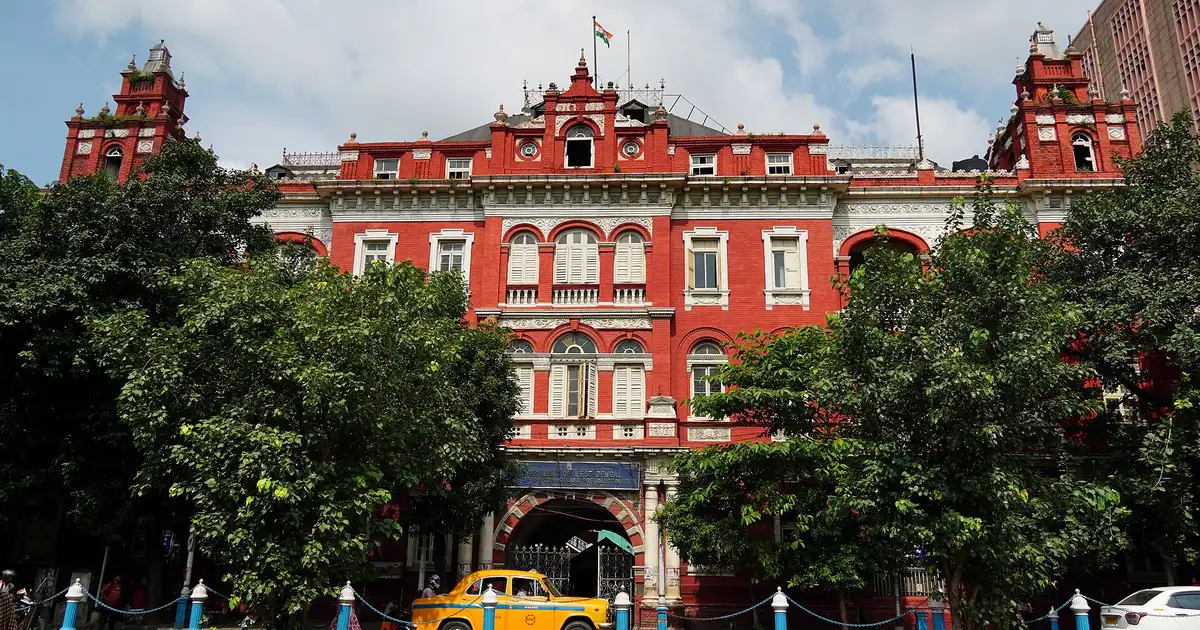
Within the city of Kolkata, a succession certificate petition is filed in the City Civil Court, 2 & 3 Kiran Shankar Roy Road, Kolkata 700001. The Calcutta High Court, on its Original Side, also has jurisdiction over these petitions. Outside the city, the petition goes to the District Judge of the district where the deceased lived, for example at Alipore, Barasat or Howrah. The Family Court does not deal with these petitions.
For a legal heir certificate within the Kolkata Municipal Corporation area, the Collector of Kolkata (Stamp and Revenue) issues it for cases directed by a government or a government agency. Outside Kolkata, apply to the local administrative office for your area.
Questions people ask
How do I get a succession certificate in Kolkata, and how long does it take?
File a petition under Section 372 of the Indian Succession Act in the City Civil Court or the Calcutta High Court. Attach the death certificate, proof of the relationships and a list of the debts and securities, and pay the court fee. The court publishes notice and then hears the petition. The time depends on the court's list and on whether anyone objects.
What is the difference between a succession certificate, a legal heir certificate and probate?
A succession certificate is a court order for collecting debts and securities when there is no will. A legal heir certificate is an administrative document naming the family, used mainly for government dues. Probate is the court's certification of a will.
The bank is asking for a succession certificate though there is a nominee. Is that right?
Usually not. Banks pay the nominee and are discharged by doing so. The nominee holds the money for the legal heirs, who settle shares among themselves. Ask the bank in writing for its reason, and escalate under its grievance process if needed.
Who issues a legal heir certificate in Kolkata?
Within the Kolkata Municipal Corporation area, the Collector of Kolkata (Stamp and Revenue) issues it for cases directed by a government or a government agency, such as pension or provident fund claims. For other purposes, a succession certificate from a court is usually needed.
Succession certificate ke liye kitni court fee lagti hai?
Court fee debts aur securities ki total value par percentage ke hisaab se lagti hai, West Bengal mein lagu court-fee kanoon ke anusaar. Exact rakam ke liye current rate aur apni rakam ki value dekh kar vakil se calculate karwayein.
Can an NRI heir apply from abroad?
Yes. An NRI heir can act through an attorney holding a power of attorney executed abroad, with the affidavits and consents of the other heirs. The papers must be signed before an Indian embassy or notarised and apostilled, and stamped in India. See our power of attorney guide.
Need help with a property matter?
PKS Legal advocates have practised since 1980. We are based in Kolkata and advise clients from across India by phone and video call. Tell us about your matter and an advocate will get back to you.
Become a ClientCall +91 81001 21141This guide gives general information about the law in India as on 17 November 2026. It is not legal advice for your situation, and reading it does not create a lawyer-client relationship. Rules and limits change; please take advice on your own facts.