
In short: a POCSO case is a prosecution under the Protection of Children from Sexual Offences Act, 2012 for a sexual offence against anyone under 18. Most POCSO offences are non-bailable: bail is sought from the Special Court under Section 483 BNSS (old Section 439 CrPC). A child's consent is no defence, and trials should finish within one year.
POCSO case kya hota hai: the offences and punishment
The Act protects every person below 18, boy or girl. The main offences and their punishment, as amended in 2019, are:
- Penetrative sexual assault (Sections 3 and 4): at least 10 years, up to life. If the child is under 16, at least 20 years, up to imprisonment for the rest of the person's natural life.
- Aggravated penetrative sexual assault (Sections 5 and 6), for example by a police officer, teacher, relative or person in a position of trust, or on a child under 12: at least 20 years, up to life for the rest of natural life, or death.
- Sexual assault (touching with sexual intent, Sections 7 and 8): 3 to 5 years. Aggravated sexual assault (Sections 9 and 10): 5 to 7 years.
- Sexual harassment (Sections 11 and 12), including sexual remarks, showing pornography, stalking a child online or threatening to use a real or fake image: up to 3 years.
- Using a child for pornographic purposes, and storing such material (Sections 13 to 15).
The same facts often also attract the rape provisions of the Bharatiya Nyaya Sanhita, Sections 64 to 70 (old Section 376 family of the IPC). The Special Court tries both together.
For the child's family: reporting, support and compensation
- Report to the police or the Special Juvenile Police Unit. Anyone who knows of an offence must report it (Section 19). Failing to report can be punished with up to six months' imprisonment, and up to one year for the head of an institution who fails to report about a subordinate (Section 21).
- The child's statement is recorded at home or a place of the child's choice, as far as possible by a woman officer not below sub-inspector, not in uniform (Section 24).
- Within 24 hours the police must report the case to the Child Welfare Committee and the Special Court, including any need for care and protection (Section 19(6)).
- Support person: the Child Welfare Committee can appoint a support person to help the child through the investigation and trial, with the consent of the child and parents (POCSO Rules, 2020).
- Your own lawyer: the family may engage a lawyer of their choice, and free legal aid is available if they cannot afford one (Section 40).
- Compensation: the Special Court can order interim compensation for relief and rehabilitation at any stage, and final compensation, paid by the State (Section 33(8) and Rule 9 of the POCSO Rules, 2020).
The child's name, address, school or photo must never be disclosed in any media (Section 23).
How a POCSO trial runs in the Special Court
POCSO cases are tried by designated Special Courts, which have the powers of a Court of Session (Sections 28 and 33). The trial is held in camera, with a parent or trusted person present (Section 37). The child must not see the accused while giving evidence; screens or video links are used (Section 36). The child's evidence is to be recorded within 30 days of the court taking cognizance, and the trial is to be completed, as far as possible, within one year (Section 35). In practice many trials take longer.
Two presumptions make these cases different. For offences under Sections 3, 5, 7 and 9, the court presumes the accused committed the offence unless the contrary is proved (Section 29). The court also presumes a culpable mental state (Section 30). The prosecution must still first establish the basic facts. These are serious cases, and nothing about them is easy for either side.
POCSO bail: bailable or not?
Most POCSO offences are non-bailable. Bail is decided by the Special Court under Section 483 BNSS (old Section 439 CrPC), and if it is refused, a bail application can be made to the High Court. The court looks at:
- the seriousness of the charge and the evidence collected;
- whether the accused could influence or threaten the child or the family, who are often neighbours or relatives;
- whether the charge sheet has been filed and the child's evidence recorded;
- the age of the accused and the child, and, in close-age relationship cases, the circumstances;
- time already spent in custody and the likely length of trial.
Anticipatory bail is sought under Section 482 BNSS (old Section 438 CrPC). Section 482(4) bars it where the accusation is under Section 65 BNS (rape of a girl under 16) or Section 70(2) BNS (gang rape of a girl under 18). High Courts have differed on how absolute that bar is, so take advice on your exact charges. For general bail principles, see our guide on how to get bail.
Age determination in a POCSO case
Whether the victim was under 18 decides whether POCSO applies at all. Courts follow Section 94 of the Juvenile Justice Act, 2015, in this order: first, a date-of-birth certificate from the school or the matriculation certificate; if not available, a birth certificate from the municipal corporation, municipality or panchayat; and only if neither exists, an ossification test or other medical test. The Supreme Court applied this method to child victims in Jarnail Singh v. State of Haryana (2013). The Special Court decides the question and records its reasons (Section 34).
Consent, close-age relationships and false cases
Under POCSO, consent of a person under 18 is not a defence. This often leads to cases against young men in relationships with girls of 16 or 17. In In Re: Right to Privacy of Adolescents, the Supreme Court in August 2024 set aside a Calcutta High Court judgment that had acquitted the accused in such a case and restored his conviction. In May 2025 it decided not to impose a sentence because of the victim's own wishes and circumstances, using its special power under Article 142, and said that the decision is not a precedent. Other courts cannot do the same.
Making a false complaint of a POCSO offence to humiliate, extort, threaten or defame someone is itself an offence, punishable with up to six months' imprisonment (Section 22). No punishment applies where a child made the false complaint.
POCSO Special Courts in Kolkata and West Bengal
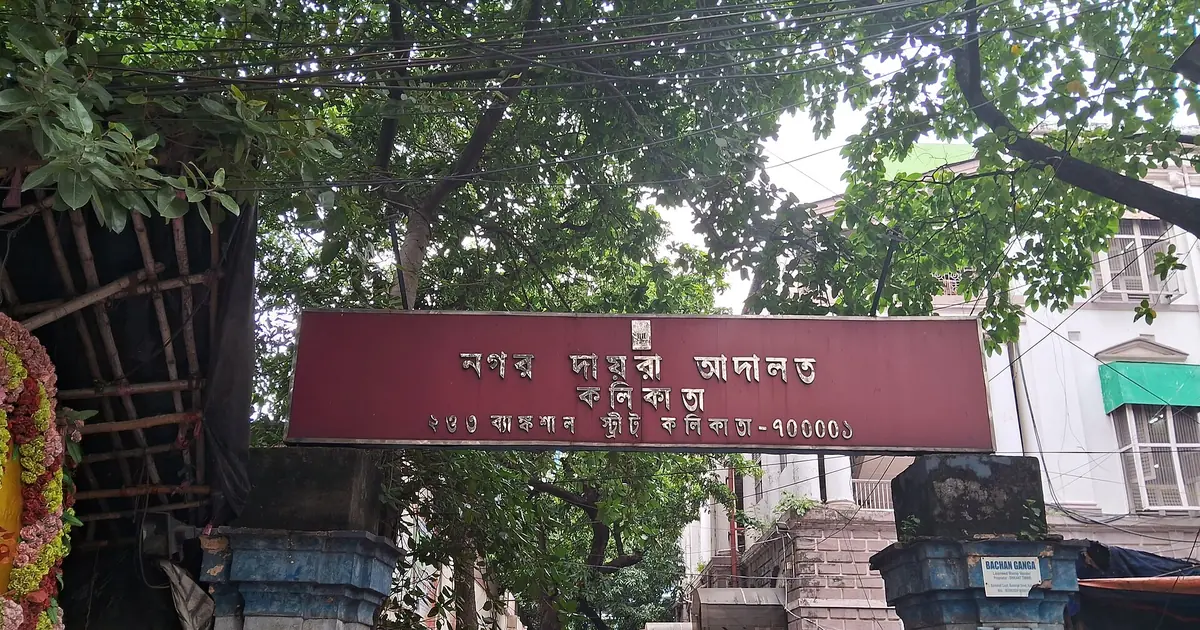
In Kolkata, POCSO cases from police stations attached to the City Sessions Court are tried by the POCSO Special Court there, at 2 and 3 Bankshall Street, Kolkata 700001. Some Kolkata Police stations are attached to the Sealdah or Alipore courts instead. Cases from South 24 Parganas go to the Special Court at Alipore, and every other district has Special Courts designated at its district court. Check which Special Court the police station is attached to. Bail appeals and quashing petitions go to the Calcutta High Court.
Questions people ask
Is a POCSO offence bailable?
Most POCSO offences are non-bailable. Bail is not automatic; the Special Court decides under Section 483 BNSS, looking at the charge, the evidence, the risk to the child and the stage of the trial.
POCSO case kya hota hai aur bail kaise milti hai?
POCSO case 18 saal se kam umar ke bachche ke saath yaun apradh ka case hota hai. Zyadatar dharayein non-bailable hain, isliye bail Special Court se Section 483 BNSS ke tahat maangni padti hai; mana hone par High Court ja sakte hain.
How is the child's age proved?
Under Section 94 of the Juvenile Justice Act: the school date-of-birth or matriculation certificate first, then a municipal or panchayat birth certificate, and a medical (ossification) test only if neither exists.
Does consent matter if the girl was 17 years old?
No. Under POCSO anyone below 18 is a child, and a child's consent is not a defence. The age of both persons and the circumstances may be relevant to bail and sentencing, but not to whether the offence is made out.
Can the complainant withdraw a POCSO case?
No. POCSO offences cannot be compounded or withdrawn by the family. The trial continues on the evidence, and the Supreme Court has held that serious sexual offences should not be quashed merely because the parties have settled.
How long does a POCSO trial take?
The Act asks the Special Court to record the child's evidence within 30 days of cognizance and to finish the trial within one year as far as possible. Many trials take longer because of court workload.
Facing a criminal case or arrest?
PKS Legal advocates have practised since 1980. We are based in Kolkata and advise clients from across India by phone and video call. Tell us about your matter and an advocate will get back to you.
Become a ClientCall +91 81001 21141This guide gives general information about the law in India as on 17 November 2026. It is not legal advice for your situation, and reading it does not create a lawyer-client relationship. Rules and limits change; please take advice on your own facts.