
In short: the injured person, or the legal heirs of a person killed, claim compensation before the Motor Accident Claims Tribunal (MACT) under Section 166 of the Motor Vehicles Act, 1988. The law sets six months to file (Section 166(3)), but the Supreme Court has told tribunals not to reject late claims while it decides a challenge. File early anyway.
Who can claim and where
A claim can be made by the injured person, the owner of damaged property, the legal representatives of a person who died, or an agent authorised by them (Section 166(1)). It can be filed before the tribunal where the accident happened, where the claimant lives or carries on business, or where the defendant lives (Section 166(2)). The owner and driver of the vehicle and its insurer are the opposite parties. In practice the insurer pays most awards.
MACT claim procedure, step by step
- Get medical treatment first. Under the Cashless Treatment of Road Accident Victims Scheme, 2025, any person injured in a road accident can get cashless treatment up to ₹1.5 lakh for up to seven days from the accident at designated hospitals. Other hospitals provide stabilisation.
- Make sure an FIR is registered at the police station where the accident happened. The police must also prepare an accident report and send it to the Claims Tribunal. If the police refuse to register the case, see our guide on FIR not registered.
- Collect documents (list below) and keep every bill.
- File the claim petition before the MACT, or ask the tribunal to treat the police accident report as your claim (Section 166(4)).
- Settlement offer: the insurer must appoint an officer for the claim and may make a settlement offer before the tribunal within thirty days (Section 149). If you accept, the tribunal records it and the insurer must pay within thirty days. If you reject it, the claim goes to hearing.
- Evidence and award: the tribunal hears witnesses, including doctors and employers, and passes an award under Section 168, usually with interest.
- Appeal: either side can appeal to the High Court within 90 days of the award (Section 173).
MACT claim time limit
The 2019 amendment added Section 166(3): no claim is to be entertained unless filed within six months of the accident. It took effect on 1 April 2022. A writ petition challenging this limit is pending in the Supreme Court, and in November 2025 the Court directed that, while the case is pending, tribunals and High Courts must not dismiss claim petitions as time-barred under Section 166(3). That protects late claimants for now, but the position could change when the Court decides the case. The safe course is to file within six months.
Documents needed for a MACT claim
- Copy of the FIR, the charge sheet if filed, and the seizure list and vehicle inspection report.
- Registration, insurance and driving licence details of the offending vehicle (the police papers usually have these).
- For injury: hospital discharge summary, medical bills, prescriptions, X-rays, and a disability certificate from a medical board where there is permanent disability.
- For death: death certificate, post-mortem report, and proof of the legal heirs.
- Proof of age and income of the victim: salary slips, income tax returns, Form 16 or business records.
- Identity and address proof and bank details of the claimants.
MACT claim calculation: how compensation is worked out
Compensation must be "just". For a death claim, tribunals follow the method set out by the Supreme Court in Sarla Verma v. Delhi Transport Corporation (2009) and National Insurance Co. v. Pranay Sethi (2017):
- Take the victim's annual income.
- Add future prospects: for a permanent job, 50% if the victim was under 40, 30% between 40 and 50, and 15% between 50 and 60. For the self-employed or those on a fixed wage, 40%, 25% and 10%.
- Deduct the victim's personal expenses: one-third where there were two or three dependants, one-fourth for four to six, one-fifth above six, and usually half for an unmarried victim.
- Multiply by the multiplier for the victim's age (it falls as age rises, from 18 for young victims down to 5 for the oldest).
- Add the conventional heads fixed in Pranay Sethi: loss of estate ₹15,000, loss of consortium ₹40,000 and funeral expenses ₹15,000, each to be increased by 10% every three years.
For injury, the award covers medical expenses, loss of earnings during treatment, future loss of earning capacity based on the functional disability, attendant and transport costs, and amounts for pain and suffering and loss of amenities.
No-fault compensation and hit-and-run cases
Under Section 164, as substituted in 2019, the owner or insurer must pay a fixed ₹5 lakh for death and ₹2.5 lakh for grievous hurt, and the claimant does not have to prove anyone's negligence. Any amount paid under another law is deducted. This is an alternative to the full claim under Section 166, which needs proof of negligence but has no cap.
Where the vehicle cannot be identified (hit and run), Section 161 provides a fixed ₹2 lakh for death and ₹50,000 for grievous hurt, paid under the Compensation to Victims of Hit and Run Motor Accidents Scheme, 2022. The application goes through the claims enquiry officer of the area. If the vehicle is traced later, a full claim can still be made.
When the insurer says the driver had no valid licence
Section 150(2) (old Section 149(2)) lists the limited defences an insurer can raise, mainly breach of a specified condition of the policy, such as driving by a person without a valid licence. In National Insurance Co. v. Swaran Singh (2004), decided under the old section, the Supreme Court held that the insurer must prove a breach of the policy that is fundamental and that the owner was at fault. Under the old law, tribunals often ordered the insurer to pay the victim first and recover the money from the owner. For accidents from 1 April 2022, when the 2019 amendment took effect, High Courts have differed on whether that order can still be made, so take advice on the current position.
The criminal case against the driver
The police case is separate from the claim. Causing death by a rash or negligent act is an offence under Section 106(1) of the Bharatiya Nyaya Sanhita (old Section 304A IPC). Endangering life or causing hurt by rash driving falls under Section 125 BNS (old Sections 336 to 338 IPC). An acquittal in the criminal case does not automatically defeat the compensation claim, because the tribunal decides on the balance of probabilities.
MACT courts in Kolkata and West Bengal
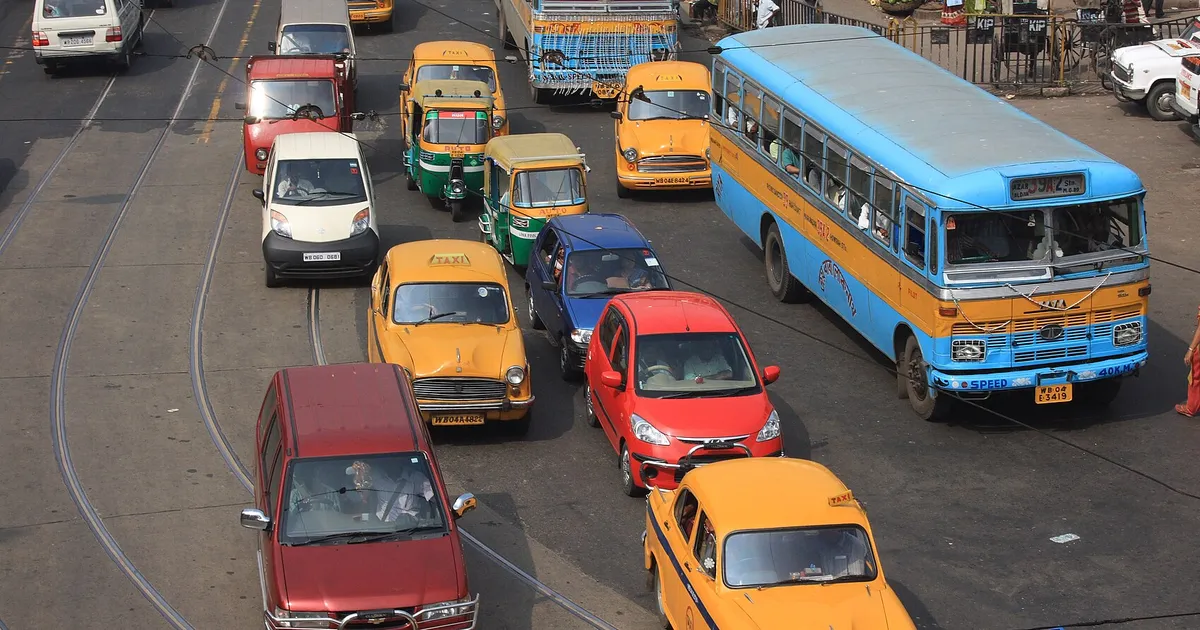
In Kolkata, motor accident claims are heard by Motor Accident Claims Tribunals sitting in the City Civil Court, Calcutta. For South 24 Parganas the tribunal sits at Alipore, and other districts have their own tribunals at the district headquarters. Appeals from all of them go to the Calcutta High Court. Because a claim can be filed where the claimants live, a family in Kolkata can usually file here even if the accident happened in another district or State.
Questions people ask
What is the time limit to file a MACT claim?
Section 166(3) says six months from the accident. Since November 2025 the Supreme Court has directed tribunals not to dismiss claims as time-barred while it hears a challenge to that limit, but filing within six months is the safe course.
How is compensation calculated for death or injury?
For death: annual income plus future prospects, minus personal expenses, multiplied by an age-based multiplier, plus fixed amounts for loss of estate, consortium and funeral. For injury: medical costs, lost earnings, loss of future earning capacity, and pain and suffering.
Accident claim kaise karein aur kitna paisa milta hai?
FIR ki copy, medical ya death papers aur income proof ke saath Motor Accident Claims Tribunal mein Section 166 ke tahat claim file karein. Rakam victim ki income, umar aur dependants par depend karti hai. Bina negligence prove kiye maut par ₹5 lakh aur grievous hurt par ₹2.5 lakh fixed milta hai.
The vehicle is unidentified (hit and run). Can we still claim?
Yes. Under Section 161 the family gets ₹2 lakh for death and the victim ₹50,000 for grievous hurt, through the hit-and-run compensation scheme. If the vehicle is later traced, a full claim against its owner and insurer is possible.
What documents are needed for a MACT claim?
The FIR and police papers, vehicle and insurance details, medical records and bills or the death certificate and post-mortem report, proof of age and income, and proof of the claimants' identity and relationship.
Can the insurer refuse because the driver had no valid licence?
It can raise that defence, but it must prove a fundamental breach and the owner's fault. Under the old law courts often directed the insurer to pay the victim and recover from the owner; for accidents from 1 April 2022, High Courts differ on whether this is still possible.
Need help with a dispute?
PKS Legal advocates have practised since 1980. We are based in Kolkata and advise clients from across India by phone and video call. Tell us about your matter and an advocate will get back to you.
Become a ClientCall +91 81001 21141This guide gives general information about the law in India as on 17 November 2026. It is not legal advice for your situation, and reading it does not create a lawyer-client relationship. Rules and limits change; please take advice on your own facts.