
In short: most income tax notices are routine. A Section 143(1) intimation shows a mismatch in your return, a 143(2) notice opens scrutiny, and a 148A notice asks why an old year should be reopened. Reply on the e-filing portal within the time given, usually 7 to 30 days, with documents. Ignoring a notice leads to an assessment without your side.
Which law: the 1961 Act or the Income-tax Act, 2025?
The Income-tax Act, 2025 replaced the Income-tax Act, 1961 from 1 April 2026, with new section numbers. Under the repeal and savings clause (Section 536 of the 2025 Act), notices, assessments, reassessments, penalties and appeals for tax years beginning before 1 April 2026 continue under the 1961 Act. So in 2026 and for some years after, most notices about past years will still cite the old numbers, like 143(2) or 148A. Notices about tax year 2026-27 onwards will cite the 2025 Act. The table gives both.
| Notice | 1961 Act | 2025 Act | What it means | Time to respond |
|---|---|---|---|---|
| Defective return | 139(9) | 263(7) | Return incomplete or inconsistent | 15 days, or as allowed |
| Intimation after processing | 143(1) | 270(1) | Return processed; tax or refund recomputed | Respond to a proposed adjustment within 30 days |
| Scrutiny notice | 143(2) | 270(8) | Return selected for detailed assessment | As stated in the notice |
| Inquiry before assessment | 142(1) | 268(1) | Asks for a return, accounts or documents | As stated in the notice |
| Call for information | 133(6) | 252(1) | Information about a transaction, often from bank or other reports | As stated in the notice |
| Show cause before reopening | 148A | 281 | Why a past year should not be reopened | As stated in the notice |
| Reassessment notice | 148 | 280 | Past year reopened; file a return for it | As stated in the notice (up to three months) |
| Notice of demand | 156 | 289 | Tax, interest or penalty payable | Pay within 30 days unless stayed |
| Penalty for under-reporting | 270A | 439 | Penalty of 50% of tax, or 200% for misreporting | As stated in the notice |
Income tax notice 143(1): the intimation
Almost every return is processed by the Centralised Processing Centre, which sends an intimation under Section 143(1). It can be sent up to nine months from the end of the financial year in which the return was filed. It compares your return with Form 26AS and the Annual Information Statement (AIS). If the department proposes an adjustment, such as disallowing a deduction or adding income shown in AIS, it must first tell you, and you have 30 days to respond. If you disagree, respond online with reasons, seek rectification, or appeal.
Scrutiny notice 143(2) and notice 142(1)
A notice under Section 143(2) means your return has been selected for scrutiny. It must be served within three months from the end of the financial year in which the return was filed. Scrutiny now runs mainly in the faceless system: notices, questions under Section 142(1) and your replies all go through the e-Proceedings tab on the income tax e-filing portal. If the assessing officer proposes additions, you receive a show cause notice with a draft. Answer each point with evidence, because the final order is passed on the record.
Notice 133(6): a request for information
A Section 133(6) notice asks you, or sometimes a bank or third party, for information. It often follows high-value deposits, property or share deals reported in AIS. It is not an assessment, but the answer is used later. Reply accurately with documents, and keep the reply consistent with your return.
Notice under 148A and reopening old years
To reopen ("reassess") a past year, the assessing officer must first issue a show cause notice under Section 148A, with the information suggesting that income escaped tax. You reply. The officer then passes an order, with approval of a senior officer, deciding whether to issue a notice under Section 148. The 148 notice asks you to file a return for that year.
Time limits. For notices issued from 1 September 2024, a reassessment notice can generally be issued only within three years and three months from the end of the assessment year. Where the escaped income is ₹50 lakh or more, the limit is five years and three months.
In Union of India v. Ashish Agarwal (2022), the Supreme Court treated thousands of reopening notices issued under the old procedure after 1 April 2021 as show cause notices under Section 148A. In Union of India v. Rajeev Bansal (2024), it then dealt with the time limits for those notices. A reply to a 148A notice is your chance to stop the reopening, so treat it seriously: challenge the information, the time limit and the approval.
Income tax demand notice 156 and penalties
A notice of demand under Section 156 must ordinarily be paid within 30 days. If you appeal, you can ask the assessing officer for a stay of the demand. Usually you will be asked to pay a part (often a percentage of the disputed demand) while the appeal is pending.
Penalty for under-reported income under Section 270A is 50% of the tax on that income. It is 200% where the under-reporting is "misreporting", such as suppressed facts or false entries. Immunity from penalty can be sought in some cases if you accept the assessment and pay the tax.
How to reply to an income tax notice
- Check it is genuine. Log in to the e-filing portal and look under e-Proceedings or Pending Actions. Genuine notices carry a Document Identification Number (DIN).
- Note the section and the deadline. The section tells you the stage. The response date is in the notice.
- Download AIS and Form 26AS and compare them with your return and records.
- Reply point by point on the portal, attaching bank statements, sale deeds, invoices or other proof. Keep the acknowledgement.
- Ask for more time in writing, through the portal, before the deadline if you need it.
Appeal to CIT(A) and ITAT
- Commissioner (Appeals), under Section 246A: file Form 35 within 30 days of receiving the demand notice. Delay can be condoned for sufficient cause. Tax on returned income must have been paid.
- Income Tax Appellate Tribunal (ITAT), under Section 253: within two months from the end of the month in which the CIT(A) order is received.
- High Court: only on a substantial question of law.
Under the 2025 Act these are Sections 357, 362 and 365.
In Kolkata and West Bengal
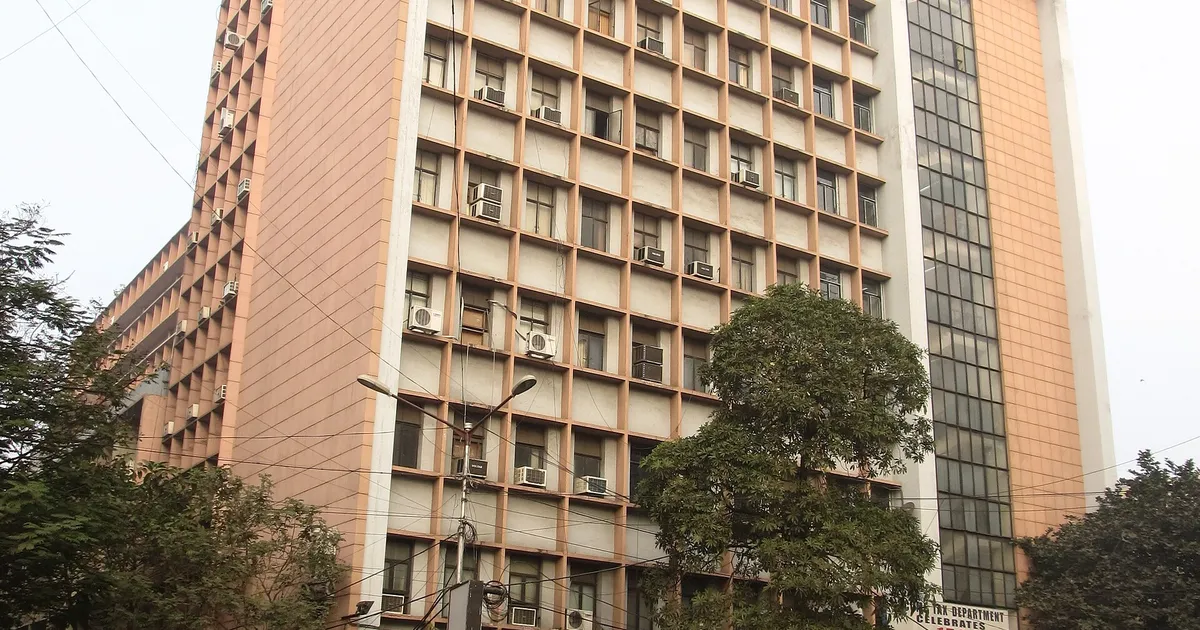
Most assessment and appeal work is now faceless and runs online, so there is usually no office to visit. Where a jurisdictional officer is involved, the income tax offices in Kolkata include Aayakar Bhawan. Appeals from the CIT(A) go to the ITAT Kolkata Benches. Appeals from the ITAT, and writ petitions against reopening or illegal notices, go to the Calcutta High Court. Writs are common in reassessment cases where the 148A procedure or the time limits were not followed.
Questions people ask
Why did I get an income tax notice?
Usually because something in your return does not match information the department holds, such as AIS, Form 26AS, bank or property reports. Other reasons are high-value transactions, a selected scrutiny case or information suggesting income escaped tax. The section number on the notice tells you which.
How many days do I have to reply?
The notice states the date. Common periods are 15 days for a defective return and 30 days for a proposed 143(1) adjustment. A demand notice must be paid within 30 days. Scrutiny and 148A notices give a specific date. You can request more time on the portal before it expires.
Income tax notice kab aata hai aur kya karna chahiye?
Notice tab aata hai jab return aur department ke data (AIS, 26AS, bank ya property records) mein mismatch ho, ya case scrutiny ya reassessment mein chuna jaaye. E-filing portal par notice check karein, deadline note karein, aur documents ke saath samay par online jawab dein.
What if I miss the deadline?
The officer can proceed on the material available and pass an assessment without your explanation, and penalties for non-compliance can follow. Reply as soon as possible, ask for the matter to be considered, and if an order has been passed, consider rectification or appeal within time.
Can a reassessment be reopened after many years?
Only within limits. For notices issued from 1 September 2024 under the 1961 Act, the limit is generally three years and three months from the end of the assessment year, extended to five years and three months where the escaped income is ₹50 lakh or more. A Section 148A show cause notice must come first in most cases.
How do I appeal against an assessment order?
File an appeal in Form 35 to the Commissioner (Appeals) within 30 days of the demand notice, then to the ITAT within two months from the end of the month you receive the CIT(A) order. A further appeal lies to the High Court only on a substantial question of law.
Received a GST or customs notice?
PKS Legal advocates have practised since 1980. We are based in Kolkata and advise clients from across India by phone and video call. Tell us about your matter and an advocate will get back to you.
Become a ClientCall +91 81001 21141This guide gives general information about the law in India as on 17 November 2026. It is not legal advice for your situation, and reading it does not create a lawyer-client relationship. Rules and limits change; please take advice on your own facts.