
In short: defamation in India is both a crime and a civil wrong. A criminal complaint lies under Section 356 of the Bharatiya Nyaya Sanhita (old Sections 499 and 500 IPC), punishable with up to two years' simple imprisonment, fine or community service. A civil suit for damages must be filed within one year. Truth for the public good is a defence.
What counts as defamation
Defamation is making or publishing an imputation about a person, by words, signs or pictures, intending or knowing that it will harm their reputation (Section 356(1) BNS). It covers a statement about a company or a group of people, and in some cases about a deceased person if it would hurt the family. Spoken words (slander), written or printed words (libel), and posts, videos and forwards online are all covered.
The law lists exceptions where there is no defamation, including:
- a true statement made for the public good;
- opinion in good faith on the public conduct of a public servant, or on a public question;
- a substantially true report of court proceedings;
- fair comment on a case after it is decided, or on a published work or performance;
- a complaint in good faith to a person with lawful authority, such as a complaint to the police or an employer;
- a caution in good faith to protect someone's interests.
Defamation case under BNS: the criminal complaint
Criminal defamation is punishable with simple imprisonment up to two years, a fine, both, or community service, a new option under the BNS (Section 356(2)). Printing, engraving or selling defamatory matter are separate offences under Section 356(3) and (4). In Subramanian Swamy v. Union of India (2016), the Supreme Court upheld criminal defamation as constitutional.
- Only the person aggrieved can complain. Under Section 222 BNSS (old Section 199 CrPC), a court can act only on a complaint by the person defamed (with limited exceptions, such as for a minor). The police cannot register an FIR and investigate defamation on their own.
- File a complaint before the Magistrate with the defamatory material, proof of publication, and witnesses who read or heard it.
- The accused is heard first. Under Section 223 BNSS, the Magistrate must give the accused a chance to be heard before taking cognizance of a complaint.
- Summons, trial and settlement. If the court proceeds, the accused is summoned. The offence is bailable and compoundable, so many cases end in an apology and withdrawal.
Damages for defamation: the civil suit
A civil suit asks the court for money damages for harm to reputation and, often, an injunction stopping further publication or ordering removal. The time limit is one year: for libel, from the date of publication (Article 75 of the Limitation Act, 1963), and for slander, from when the words were spoken (Article 76). A civil suit is filed in the civil court with jurisdiction, and court fees depend on the damages claimed. Courts grant interim injunctions against publication cautiously, because of free speech, but they do grant them where the material is plainly false and damaging.
Defamation case time limit
- Civil suit: one year from publication.
- Criminal complaint: because the maximum punishment is two years, a court cannot take cognizance after three years (Section 514 BNSS, old Section 468 CrPC). Courts also look at delay, so file promptly.
Defamation notice kya hota hai, and how to reply
A defamation notice is a letter, usually from a lawyer, saying that your statement has harmed someone's reputation and demanding that you withdraw it, apologise, remove posts or pay damages. It is often the step before a case. Do not ignore it, and do not reply in anger. Read what exactly is alleged, keep copies of what you said and why, and reply through a lawyer setting out your defence (truth, opinion, good faith) or offering a correction. Our guide to legal notices explains how notices and replies work.
If you are the person defamed, a notice is a sensible first step: it puts the other side on record, and many people remove a post once they receive one.
Online defamation and social media posts
A post, comment, review, video or WhatsApp forward can be defamation, and each person who writes or knowingly republishes it may be liable. Section 66A of the IT Act, once used for online posts, was struck down by the Supreme Court in Shreya Singhal v. Union of India (2015). Online defamation is now dealt with under Section 356 BNS and the civil law.
To get a post removed:
- Save evidence first: screenshots with the URL, date and time, and the profile link. A certificate under the Bharatiya Sakshya Adhiniyam is needed to rely on electronic records in court.
- Report it to the platform and write to its Grievance Officer. Under the IT (Intermediary Guidelines and Digital Media Ethics Code) Rules, 2021, platforms must acknowledge a complaint within 24 hours and resolve it within 15 days.
- Appeal to the Grievance Appellate Committee within 30 days if you are not satisfied with the platform's decision.
- Court order: platforms lose their safe-harbour protection under Section 79 of the IT Act if they do not remove content after a court order, so an injunction is the most reliable route for serious cases.
Where the posts are part of blackmail or sexual harassment, see our guide on sextortion and online harassment, which has faster removal routes.
Defamation cases in Kolkata and West Bengal
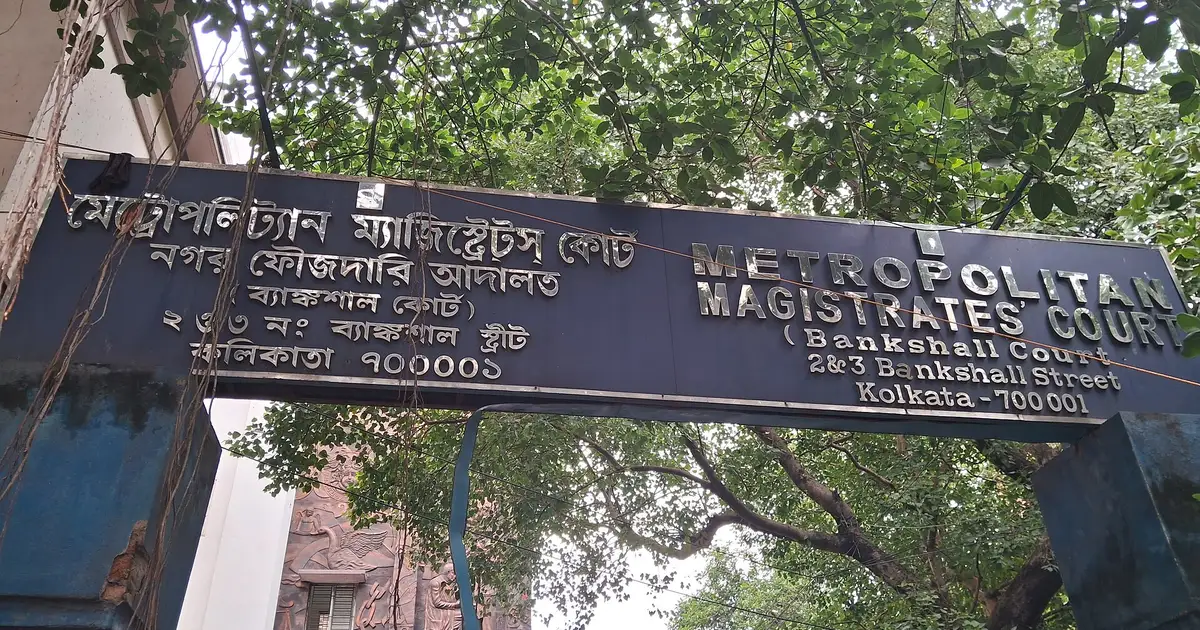
A criminal defamation complaint is filed before the Magistrate with jurisdiction over the place of the offence. For most of central Kolkata that is the Metropolitan Magistrates' courts at Bankshall Court, 2 and 3 Bankshall Street, Kolkata 700001. Some Kolkata Police areas are served by the courts at Sealdah or Alipore instead, and areas outside Kolkata go to the Judicial Magistrates of their district, for example at Alipore, Barasat or Howrah. A civil suit for damages in Kolkata is filed in the City Civil Court or, depending on the value, on the Original Side of the Calcutta High Court. Petitions to quash a defamation complaint go to the Calcutta High Court.
Questions people ask
Is defamation a criminal or civil case in India?
Both. You can file a criminal complaint under Section 356 BNS, and you can also sue for damages and an injunction in a civil court. The two can run side by side.
Defamation notice kya hota hai, and should I reply?
Defamation notice ek legal letter hai jo kehta hai ki aapki baat se kisi ki reputation ko nuksaan hua hai, aur maafi, post hatane ya damages ki maang karta hai. Ise ignore na karein; lawyer ke through soch-samajh kar jawab dein.
Which court hears a defamation complaint?
A criminal complaint goes to the Magistrate where the statement was made or published. In central Kolkata, that is usually the Metropolitan Magistrates' courts at Bankshall Court; some city areas go to Sealdah or Alipore. A civil suit goes to the civil court with jurisdiction over the claim.
What is the time limit to file a defamation case?
One year from publication for a civil suit for damages. For a criminal complaint, the court cannot take cognizance after three years, so file without delay.
How do I get a defamatory post removed from social media?
Save evidence, report the post and complain to the platform's Grievance Officer, appeal to the Grievance Appellate Committee within 30 days if needed, and for serious cases obtain a court injunction directing removal.
Is a true statement defamation?
Not if it is true and made for the public good. Truth alone is not always enough in a criminal case: the statement must also serve the public good. In a civil case, truth is generally a complete defence.
Need help with a dispute?
PKS Legal advocates have practised since 1980. We are based in Kolkata and advise clients from across India by phone and video call. Tell us about your matter and an advocate will get back to you.
Become a ClientCall +91 81001 21141This guide gives general information about the law in India as on 17 November 2026. It is not legal advice for your situation, and reading it does not create a lawyer-client relationship. Rules and limits change; please take advice on your own facts.