
In short: anticipatory bail is a court order that you will be released on bail if arrested. It is granted under Section 482 of the Bharatiya Nagarik Suraksha Sanhita (BNSS) (old Section 438 CrPC) by the Sessions Court or the Calcutta High Court. Apply to the Sessions Court first unless there is a special reason. It usually lasts until the trial ends.
What anticipatory bail is
If you have reason to believe you may be arrested for a non-bailable offence, you can apply to the court before any arrest. If the court agrees, it directs that you are to be released on bail if the police arrest you. You are not kept in custody, and the investigation goes on.
It is useful when an FIR has been filed or a complaint is likely, for example after a family quarrel, a business dispute or a 498A complaint, and you fear arrest. It does not end the case. It protects your liberty while the case runs.
Not every case needs it. For offences punishable with up to seven years, the police should usually send a notice to appear under Section 35(3) BNSS (old Section 41A CrPC) rather than arrest. The Supreme Court laid down this rule in Arnesh Kumar v. State of Bihar (2014). If you receive such a notice and comply with it, arrest is the exception. Many people still apply for anticipatory bail when the risk of arrest is real.
Anticipatory bail under Section 482 BNSS
Section 482 BNSS replaced Section 438 CrPC from 1 July 2024. The key points are:
- Who can apply: anyone who has reason to believe they may be arrested for a non-bailable offence. An FIR need not exist yet, but the fear must be based on real facts and not a vague worry.
- Which court: the High Court or the Court of Session.
- Conditions: the court may require you to be available for questioning by the police when asked, not to threaten or influence witnesses, and not to leave India without the court's permission. It can add other conditions too.
- If arrested: you are released on bail by the officer, on giving the bail bond the order requires.
- Exception: under Section 482(4), anticipatory bail is not available where the accusation is under Section 65 of the Bharatiya Nyaya Sanhita (BNS) (rape of a girl under 16 or under 12) and Section 70(2) BNS (gang rape of a girl under 18). High Courts differ on how far this bar goes, so take advice if such a section is in the FIR.
The Constitution Bench of the Supreme Court explained the remedy in Gurbaksh Singh Sibbia v. State of Punjab (1980). It held that courts should not read restrictions into it that the law does not contain.
Sessions Court or Calcutta High Court: where to apply first
Both courts have the power to grant anticipatory bail. In 2025, however, a bench of the Supreme Court said that people should ordinarily approach the Sessions Court first, and that High Courts should hear an application directly only in exceptional circumstances. Another bench has since said that going to the Sessions Court first is not a mandatory rule. The question was referred to a three-judge bench, which reserved its judgment in 2026, so check the current position before filing. In practice, start with the Sessions Court that has jurisdiction over the police station. If it refuses, you can then apply to the Calcutta High Court.
Steps and timeline
- Collect the papers: a copy of the FIR or complaint if you have it (FIRs are often available online), any police notice, and your proof of identity and address. Also gather documents that show your side of the story, such as messages, agreements or earlier complaints.
- Draft and file the application before the Sessions Court, with an affidavit and a vakalatnama signed in favour of your advocate.
- Notice to the Public Prosecutor: the court usually asks for the police case diary and hears the prosecution.
- Interim protection: the court may protect you from arrest until the next date. This is not automatic, so ask for it if arrest is likely.
- Final hearing and order: the court grants or refuses bail, with conditions.
- If refused: apply to the Calcutta High Court. If the High Court refuses too, the next step is a special leave petition in the Supreme Court.
There is no fixed time limit. The time taken depends on the court's list and on how quickly the case diary is produced.
How long anticipatory bail is valid
In Sushila Aggarwal v. State (NCT of Delhi) (2020), a Constitution Bench held that anticipatory bail is not limited in time. It ordinarily continues until the end of the trial. A court can limit it in a particular case if there are special reasons. It does not end automatically when a charge sheet is filed or when you appear in court. The court can cancel it if you break the conditions.
Anticipatory bail in a 498A, POCSO, NDPS or SC/ST case
- Dowry cruelty (BNS 85 and 86, old 498A IPC): anticipatory bail is often sought. The Arnesh Kumar safeguards apply. See our guide on false 498A cases.
- POCSO cases: there is no blanket bar, apart from the Section 482(4) exception above. Courts look closely at the facts, the evidence and the child's safety.
- NDPS cases: where a commercial quantity is involved, courts apply the strict test in Section 37 of the NDPS Act. Pre-arrest bail is rare in such cases.
- SC/ST (Prevention of Atrocities) Act: Sections 18 and 18A bar anticipatory bail. In Prathvi Raj Chauhan v. Union of India (2020), the Supreme Court held that a court may still grant it where the complaint does not make out a prima facie case under that Act.
In Kolkata and West Bengal
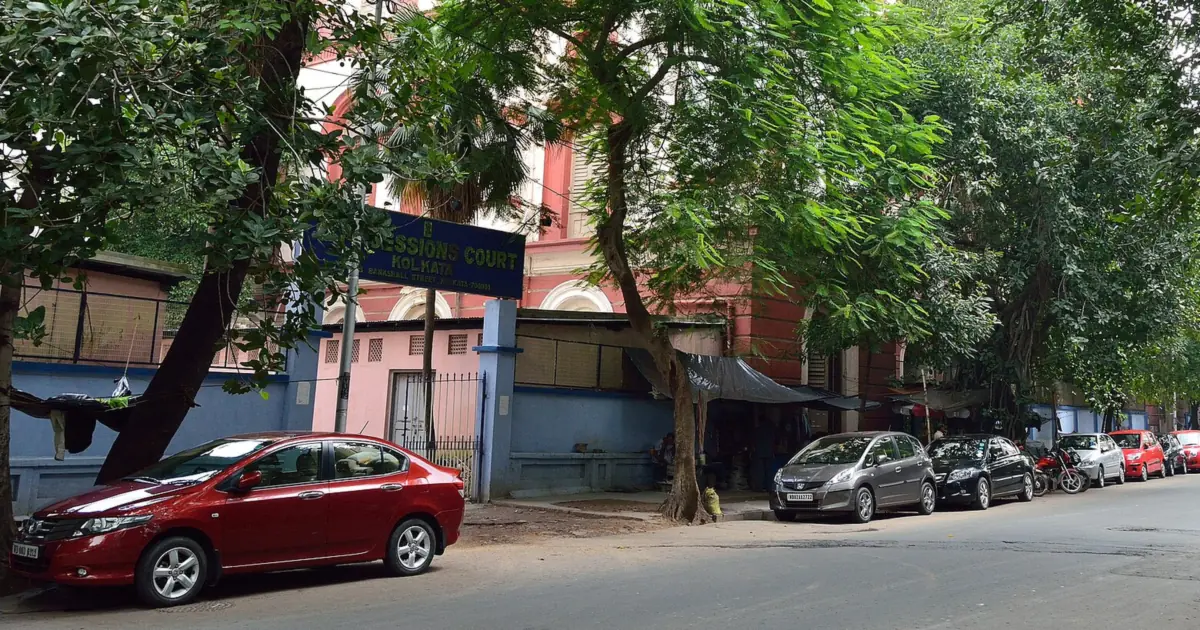
The right Sessions Court depends on the police station named in the FIR. For a Kolkata Police station, the case goes to the City Sessions Court at 2 & 3 Bankshall Street, or to the sessions courts at Sealdah or Alipore (both part of the South 24 Parganas judgeship), depending on the police station. For South 24 Parganas the court is at Alipore, for North 24 Parganas the court is at Barasat, and for Howrah district it is at Howrah. Check the police station's court before filing. If the Sessions Court refuses, apply to the Calcutta High Court in Kolkata. Cases from the northern districts are heard at its Jalpaiguri circuit bench. After you get the order, take a certified or downloaded copy to the police station or investigating officer if you are called.
Questions people ask
How long is anticipatory bail valid?
Ordinarily until the end of the trial. The Supreme Court held in Sushila Aggarwal (2020) that it is not limited in time unless the court fixes a limit for special reasons. It can be cancelled if you break its conditions.
Should I apply to the Sessions Court or the Calcutta High Court first?
Usually the Sessions Court first. Both have power under Section 482 BNSS. A Supreme Court bench said in 2025 that High Courts should hear direct applications only in exceptional circumstances, and a three-judge bench is deciding the point. If the Sessions Court refuses, apply to the High Court.
Can I get anticipatory bail after the charge sheet is filed?
Yes, if you still fear arrest. If you were not arrested during the investigation and cooperated, the Supreme Court in Satender Kumar Antil (2022) said you should not normally be arrested at the charge sheet stage. You can usually seek regular bail when you appear before the court.
Anticipatory bail kaise milti hai aur kitna time lagta hai?
Pehle Sessions Court mein Section 482 BNSS ke tahat application dalein, FIR ki copy aur apne documents ke saath. Court Public Prosecutor ko notice deti hai aur zarurat ho to beech mein arrest se protection deti hai. Time court ki list aur case diary par nirbhar karta hai, koi fixed samay nahi hai.
Is anticipatory bail possible in a POCSO, NDPS or SC/ST case?
Sometimes. It is barred for accusations under BNS 65 and 70(2), strict for commercial-quantity NDPS cases, and barred under the SC/ST Act unless no prima facie case is made out. Every other case turns on its facts.
What happens at the police station after anticipatory bail is granted?
If you are called for questioning, go with a copy of the order. If the police arrest you, they must release you on bail on the terms in the order. You must follow the conditions, such as attending questioning when asked.
Facing a criminal case or arrest?
PKS Legal advocates have practised since 1980. We are based in Kolkata and advise clients from across India by phone and video call. Tell us about your matter and an advocate will get back to you.
Become a ClientCall +91 81001 21141This guide gives general information about the law in India as on 17 November 2026. It is not legal advice for your situation, and reading it does not create a lawyer-client relationship. Rules and limits change; please take advice on your own facts.